
Pick a route you want to get back to
In this example, a runner is building back after an ankle sprain. They can walk and jog briefly on flat ground. They want to return to their usual 30 minute loop and feel steadier on the hill near the end.
Three decisions for the next block
- Pick checks that matter for the route
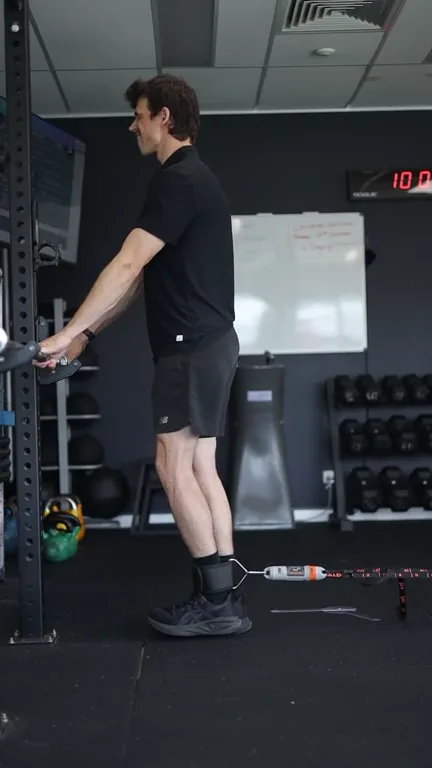
- Discuss symptoms, confidence and the runner’s current advice. We might look at repeated calf raises, balance and how they handle a step or a short jog.
- Choose what to practise
- If one calf loses height earlier and the runner tires on hills, we might build suitable calf exercises and keep initial jogs on familiar flat ground. The exact plan depends on the rest of the assessment.
- Agree what would justify adding more
- Agree how to monitor the runs and how the ankle feels later. When the runner is ready, choose one demand to add, such as time or a gentle hill.
Compare the measure with real runs
A later check might use the same calf raise setup, alongside how the runner manages the hill and how the ankle feels the next day. Together, those observations can help decide whether to add something or keep working at the current level.